



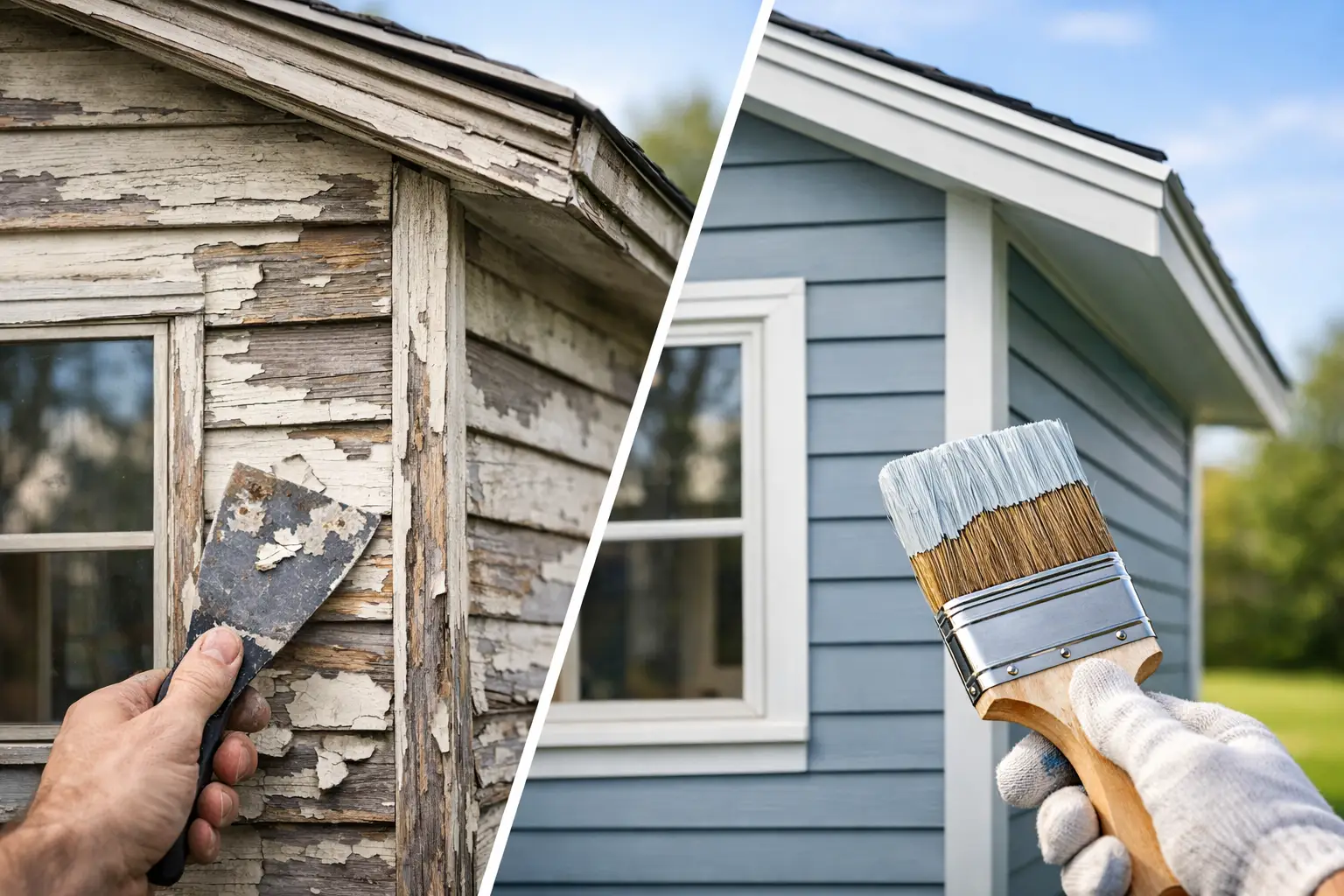
A fresh exterior paint job should do more than make a house look cared for. It should create a protective barrier against sun, moisture, wind, dust, and everyday wear. So, how long does exterior paint last? For many homes, a professionally prepared and painted exterior lasts about 7 to 10 years. But the honest answer depends on the surface, the prior condition of the home, the coating used, and how much punishment the exterior receives.
In North San Diego County and nearby inland communities, intense UV exposure is often the biggest concern. Paint may fade, dry out, or lose flexibility long before rain becomes a problem. Homes with exposed south- and west-facing walls, dark colors, wood trim, or aging stucco may need attention sooner than a shaded home with quality paint and sound preparation.
How Long Does Exterior Paint Last by Surface?
Different exterior materials hold paint differently. A single repainting schedule does not fit every home, especially when stucco walls, fascia boards, trim, and siding are exposed to different conditions.
Stucco: about 7 to 10 years
Properly coated stucco can often look good for 7 to 10 years. Its textured surface can hold paint well, but hairline cracks are common as homes settle and temperatures change. If those cracks are left open, moisture can get behind the coating and shorten the life of the paint.
Elastomeric or high-quality exterior coatings may help bridge small, non-structural cracks when applied correctly. They are not a substitute for proper stucco repair, though. Loose material, larger cracks, and damaged areas should be addressed before painting begins.
Wood siding and trim: about 3 to 7 years
Wood is one of the more demanding exterior surfaces because it expands, contracts, and absorbs moisture. Fascia boards, eaves, window trim, and exposed beams often need repainting before the stucco or siding around them.
A well-maintained wood surface may last closer to seven years. Areas with peeling paint, failed caulking, sun exposure, or sprinkler overspray can need attention in as little as three to five years. Keeping wood sealed is especially important because delayed maintenance can turn a paint project into a repair project.
Fiber-cement siding: about 10 to 15 years
Fiber-cement siding is stable, durable, and generally holds paint very well. With proper priming, quality paint, and clean installation details around joints and trim, it can often go 10 to 15 years between full repaints.
That longer lifespan does not mean it should be ignored. Caulk lines, exposed cut edges, and areas near rooflines still need periodic inspection.
Aluminum and vinyl surfaces: about 5 to 10 years
Paint on aluminum siding, gutters, and metal trim can last well when the surface is thoroughly cleaned and primed as needed. Oxidation must be removed first. Painting over a chalky metal surface without preparation can lead to early adhesion failure.
Vinyl can also be painted, but it requires the right product and color selection. Very dark colors may cause excessive heat buildup and movement in the material. A professional assessment helps determine whether painting is a practical option for the specific surface.
What Shortens the Life of Exterior Paint?
Paint failure is not always caused by bad paint. More often, a coating is asked to cover a problem that should have been repaired first. Paint can protect a prepared surface, but it cannot permanently correct moisture intrusion, rotted wood, unstable stucco, or failing caulk.
Sun exposure is a major factor in Southern California. UV rays gradually break down binders in paint, which can cause fading, chalking, and a dry-looking finish. Dark colors and heavily exposed elevations tend to show these effects first.
Moisture is another concern, even in a generally dry climate. Leaky gutters, roof issues, poorly sealed windows, irrigation spray, and damp areas near the ground can cause blistering, peeling, staining, and wood deterioration. Paint applied over damp or damaged material will not provide a lasting solution.
Preparation also makes a measurable difference. A home that is power washed, scraped, sanded, repaired, caulked, spot-primed, and coated with the proper number of finish coats will usually outlast a quick repaint. Skipping these steps may save time at the beginning, but it often leads to premature failure and more expense later.
Signs It Is Time to Repaint Your Exterior
Do not wait until paint is coming off in large sheets. Repainting before the protective coating fails completely can help prevent deeper repairs and preserve curb appeal.
Watch for fading that makes one side of the house noticeably different from another, chalky residue that rubs off on your hand, peeling or bubbling paint, open caulk joints, exposed bare wood, cracked stucco, or rust stains around metal fixtures. Also pay attention to trim near gutters, doors, windows, and sprinklers. These are common places for paint problems to begin.
A few isolated issues do not always mean the whole house needs repainting. Sometimes targeted repairs and touch-up work can extend the finish. However, if fading, chalking, or adhesion problems are widespread, a full exterior repaint is usually the more durable and consistent choice.
The Preparation Work That Helps Paint Last Longer
The best exterior painting projects start well before the first finish coat goes on. Professional preparation creates a clean, stable surface so paint can bond as intended.
First, the exterior should be washed to remove dirt, cobwebs, pollen, chalking, and mildew. A clean surface improves adhesion and gives the painter a clearer view of cracks, damaged trim, and failed caulking.
Next comes repair work. This can include scraping loose paint, sanding rough edges, replacing or repairing deteriorated wood, patching stucco damage, and sealing gaps around trim and penetrations. Primers are then used where they are needed, particularly on bare wood, repaired areas, metal, and surfaces with stains or adhesion concerns.
Finally, premium exterior paint should be applied at the correct coverage rate. Thin coats may look acceptable on the day of completion but offer less protection over time. Applying quality materials in suitable weather conditions gives the coating its best chance to cure properly and perform for years.
At The Painter Man, this preparation-focused approach is part of protecting the home, not an optional extra. Careful repair and coating work helps homeowners avoid the disappointment of seeing a recently painted exterior fail too soon.
How to Extend the Life of Your Exterior Paint
A little routine attention can help postpone a full repaint. Walk around the house once or twice a year, especially after heavy rain or strong winds. Look for developing cracks, loose caulk, clogged gutters, and sprinkler heads that hit the walls or trim.
Keep landscaping trimmed back from the exterior. Branches and vines can trap moisture, scratch paint, and make it harder to spot damage. Clean dirt and cobwebs from lower walls as needed, but avoid aggressive pressure washing that can force water behind siding or damage aging surfaces.
Address small problems promptly. Recaulking an open joint or repairing a small area of failing wood is far simpler than waiting for water to spread behind the paint film. If you keep leftover paint for touch-ups, label it with the color, sheen, room or exterior location, and date of application.
Choosing the Right Time for an Exterior Repaint
The ideal repainting schedule is based on condition, not just the calendar. A home painted eight years ago may still have years of life left if it has been protected from heavy sun and moisture. Another home may need repainting after five years because of failing trim, poor previous preparation, or severe exposure.
If you are considering selling, repainting can also be a practical investment when the existing exterior looks faded or neglected. A clean, consistent finish strengthens first impressions and can help buyers see that the property has been maintained.
The right time to repaint is before minor wear becomes surface damage. A careful on-site assessment can identify whether your home needs a full repaint, focused repairs, or simply a maintenance plan that keeps its exterior protected.
Leave a Reply