


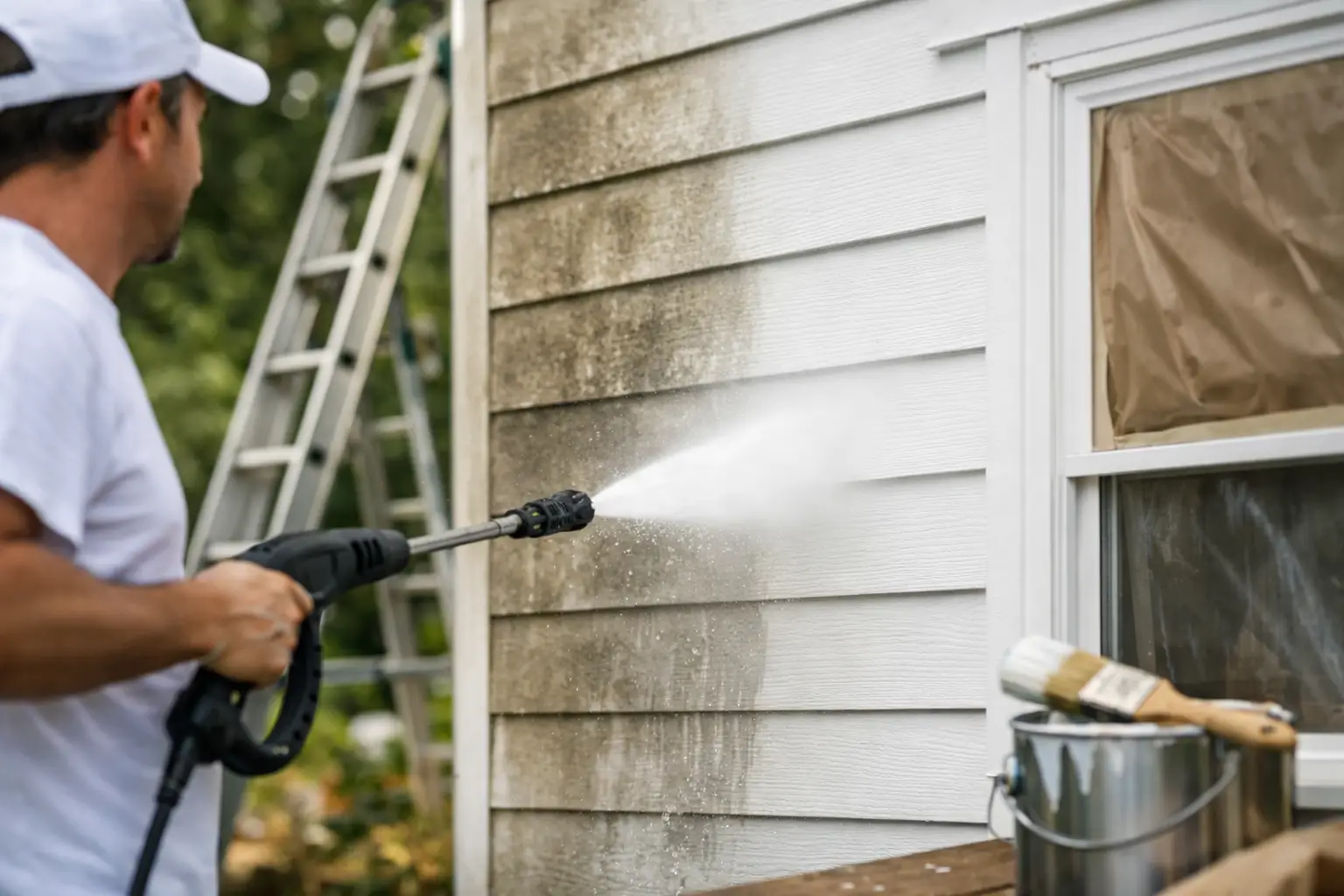
A fresh exterior color can make a home look cared for overnight, but paint cannot reliably cover a surface that is dusty, chalky, or streaked with mildew. Power washing before house painting is often the step that determines whether a new finish looks good only at first or continues protecting the home through years of sun, wind, and seasonal weather.
For homeowners in North San Diego County and South Riverside County, exterior surfaces collect more than ordinary dirt. Dry airborne dust, pollen, cobwebs, irrigation overspray, tree debris, and moisture in shaded areas can all interfere with paint adhesion. A properly cleaned surface gives primer and paint a sound foundation. It is not a cosmetic extra. It is part of doing exterior painting correctly.
Why Power Washing Before House Painting Matters
Exterior paint bonds to the surface beneath it, not to the layer of grime sitting on top. When paint is applied over dust, chalking old paint, or mildew, it may begin to peel, blister, or wear unevenly sooner than expected. Even where the coating does not fail right away, contaminants can leave a rough appearance or cause noticeable weak spots in the finish.
Power washing removes loose dirt and residue that hand wiping cannot efficiently address across a full exterior. It is especially useful on stucco, fascia boards, trim, fences, concrete-adjacent walls, and siding that has been exposed to weather for several years. The goal is not simply to make the house look cleaner. The goal is to expose a stable, paint-ready surface.
Chalking is one common issue. As older exterior paint breaks down under sun exposure, it can leave a powdery film on the surface. Run a hand across a faded wall and look for a dusty residue on your palm. Painting over that chalk without proper cleaning can prevent the new coating from getting a secure hold.
Mildew deserves particular attention. It often appears as dark spotting or discoloration on shaded stucco, eaves, north-facing walls, and areas near dense landscaping. Pressure alone may not fully treat organic growth, so a professional may use an appropriate cleaning solution before rinsing. If mildew is merely painted over, it can reappear and compromise the appearance of the new work.
Not Every Surface Needs High Pressure
“Power washing” is a familiar term, but it does not mean applying maximum pressure to every part of a home. Exterior preparation calls for judgment. Too much pressure can force water behind siding, damage aging wood, gouge soft trim, loosen failing stucco, or scar window screens and seals.
A skilled painter adjusts the method to the material and its condition. Durable masonry or concrete may tolerate a stronger rinse, while painted wood, delicate trim, older stucco, and areas around windows require lower pressure and a more controlled approach. In some situations, soft washing, hand cleaning, or targeted treatment is the safer choice.
This is one reason a quick do-it-yourself wash can create problems that are not obvious until later. A rented pressure washer may remove loose paint and dirt, but it can also drive moisture into cracks, lift weakened caulking, or expose repairs that need attention before painting begins. Those discoveries are not necessarily bad. Finding deterioration before paint goes on is far better than sealing it beneath a new finish. The key is knowing how to respond without causing further damage.
Stucco Requires a Careful Approach
Stucco is common throughout Southern California, and its textured surface holds dust more readily than smooth siding. It also has hairline cracks, patched areas, and textured finishes that can be damaged by aggressive washing. A careful rinse removes surface contamination while preserving the integrity of the wall.
After cleaning, the surface should be inspected for cracking, loose material, failed sealant around penetrations, and previous patchwork that may need blending. Paint can help protect stucco, but it is not a substitute for proper stucco repair. Addressing those issues before priming helps create a more uniform finish and reduces places where moisture can enter.
Wood Trim Can Reveal Hidden Maintenance Needs
Fascia, eaves, window trim, and exposed wood features often show the effects of sun and moisture first. Washing may reveal peeling paint, soft wood, open joints, or areas where caulk has failed. These conditions should be repaired, scraped, sanded, and primed as needed rather than covered with finish paint.
A sound painting process treats cleaning as the beginning of surface preparation, not the end of it. The best results come from combining washing with the right repairs and primers for the material.
How Long Should You Wait to Paint After Washing?
A house must be fully dry before primer or paint is applied. The exact drying time depends on the material, weather, shade, and how much water the surface absorbed. In warm, dry conditions, some surfaces may be ready within 24 hours. Stucco, wood, shaded walls, and areas with deep texture can need longer.
Rushing this step can trap moisture beneath the paint film. That may lead to bubbling, peeling, staining, or premature failure. A professional painting crew evaluates the condition of the surface rather than working from a fixed clock alone. If morning marine layer, unexpected rain, or cool shaded conditions slow drying, the schedule should allow for it.
This is also why washing and painting should be planned together. Cleaning a home weeks before the painting work begins can allow fresh dust, pollen, and debris to settle again. When possible, washing is scheduled close enough to the painting start date that the surface remains clean, while still allowing proper drying time.
What Power Washing Cannot Fix
Washing prepares a surface, but it does not correct structural or coating failures. Homeowners should not expect it to solve dry rot, cracked stucco, loose boards, rusted metal, failing caulk, or paint that is peeling because of underlying moisture intrusion.
It also will not make every old coating suitable for repainting. If paint is badly peeling or has multiple unstable layers, scraping and sanding are necessary. Bare wood, patched stucco, repaired drywall on exterior soffits, and certain stained surfaces may require a compatible primer before finish coats are applied.
A thorough exterior assessment looks beyond cleanliness. It identifies which areas can be washed and painted, which need repair first, and which require specialized preparation. This protects the investment in premium paint and avoids the disappointment of a new color applied over a failing surface.
When Homeowners Should Leave the Work to a Professional
Small, accessible areas can sometimes be cleaned carefully by a homeowner. A lightly soiled patio wall or a modest fence may be manageable with the right equipment and a low-pressure technique. Full-house washing is different, particularly on two-story homes, properties with steep grades, older woodwork, extensive stucco, or landscaping close to the walls.
Professional preparation reduces several common risks: damaged surfaces, water intrusion, missed mildew, overspray on windows, and runoff that affects surrounding plants or hardscape. It also creates a clear sequence for the rest of the job – washing, drying, repairs, scraping, sanding, caulking, priming, finish coats, and cleanup.
For a painting project, having one accountable contractor handle that sequence can make a meaningful difference. The Painter Man evaluates the exterior on site and can identify whether washing alone is appropriate or whether stucco repair, wood repair, priming, or other preparation should be included in the written estimate. That approach helps homeowners understand what their property needs before work begins, rather than receiving surprises after paint has already been applied.
A Better Start for a Longer-Lasting Finish
Fresh paint is one of the most visible improvements a homeowner can make, but its performance is decided long before the final coat goes on. Power washing creates the clean foundation that exterior paint needs, while careful inspection reveals the repairs and preparation that should not be skipped.
Before choosing a color or setting a painting date, take a close look at the walls, trim, eaves, and shaded areas around the home. If the surface leaves powder on your hand, shows dark organic staining, or has years of accumulated dust, cleaning should be part of the plan. A careful start gives the finished paintwork its best chance to look clean, adhere well, and protect the property with the care it deserves.
Leave a Reply