



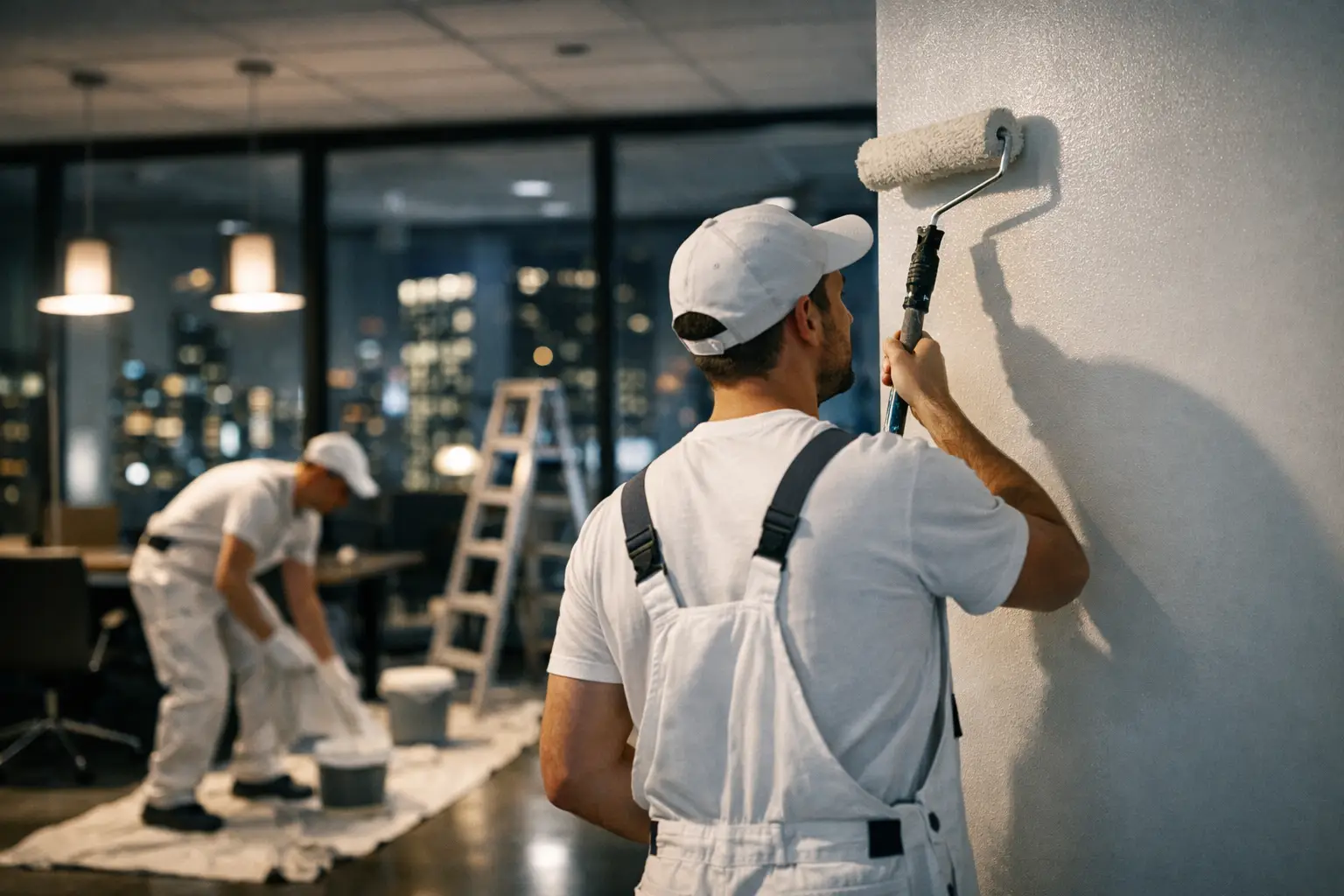
A fresh lobby, retail floor, or dining room should not require closing the doors during your busiest hours. Commercial painting after business hours gives business owners a practical way to improve their space while protecting customer service, employee productivity, and daily revenue.
For offices, retail suites, and small restaurants, the schedule can matter as much as the paint color. A contractor may have only a few evening hours to prepare surfaces, make repairs, apply coatings, clean the work area, and leave the space ready for the next morning. That takes planning, dependable communication, and a crew that respects both the property and the business operating inside it.
Why After-Hours Painting Works for Many Businesses
Painting while customers, staff, deliveries, and appointments are moving through a building creates avoidable complications. Furniture must be shifted repeatedly, workers may need to stop and start around foot traffic, and wet surfaces can become a safety concern. Even a well-contained project can feel disruptive when phones are ringing and customers are waiting nearby.
Evening or overnight work reduces those conflicts. An office can remain available during the workday. A retail business can keep its displays accessible. A restaurant can avoid having painters working around diners and food service. The result is often a more organized project and less interruption for the people who rely on the space.
After-hours scheduling is especially useful for occupied interiors, including reception areas, hallways, conference rooms, restrooms, break rooms, retail walls, and customer-facing entrances. It can also be a good fit for projects that need to be completed in phases, such as repainting one office suite or one section of a store at a time.
That said, night work is not automatically the right answer for every project. Exterior painting depends on weather, temperature, moisture, and drying conditions. Larger interiors may require several shifts, and some coatings need more curing time than an overnight window allows. A professional on-site assessment helps determine whether the schedule, product selection, and scope can realistically support a next-day reopening.
What Commercial Painting After Business Hours Requires
A successful after-hours project begins well before the first drop cloth is placed. The contractor should understand when the building is occupied, which entrances can be used, who will provide access, where materials can be staged, and what must remain untouched. Security procedures, alarm systems, key or code access, parking restrictions, and cleaning expectations should be discussed clearly in advance.
A written estimate and timeline are valuable here because they turn assumptions into a workable plan. Business owners should know which areas will be completed each night, when furniture needs to be moved, whether equipment must be covered, and when the work area will be ready for staff again.
Preparation Still Comes First
An after-hours schedule should never mean rushed preparation. Paint performs best on clean, sound, properly repaired surfaces. Depending on the space, that may include patching drywall damage, repairing minor trim issues, sanding rough areas, caulking gaps, spot-priming stains, or matching existing wall texture.
Skipping those steps may save time on the first night, but it can leave visible patch outlines, peeling edges, flashing, or an uneven finish that reflects poorly on the business. Good commercial painting balances efficiency with the preparation needed for lasting results.
Work areas should also be protected carefully. Floors, countertops, shelving, fixtures, electronics, and merchandise need appropriate coverings. In a retail or restaurant setting, the contractor may need to work around permanent displays or equipment that cannot be moved easily. Thoughtful masking and containment keep the focus on the new finish rather than on cleanup problems.
Product Choice Matters Overnight
Not every paint is suited to an after-hours commercial schedule. Low-odor, low-VOC products can help make occupied spaces more comfortable when employees arrive the next day. Fast-drying coatings may allow multiple steps in one shift, but they still need to be selected for the surface, traffic level, and desired finish.
For example, a busy hallway may need a durable washable coating that stands up to scuffs and frequent cleaning. A restaurant restroom may benefit from a moisture-resistant finish. An office conference room may call for a finish that gives walls a clean appearance without excessive sheen. The fastest product is not always the best product if it sacrifices durability or appearance.
Ventilation also deserves attention. Even low-odor paints require appropriate airflow and careful use. The contractor should account for the building’s HVAC schedule, openable windows, and any areas where fumes or dust need additional control.
A Practical Schedule for Occupied Spaces
Most after-hours projects work best when broken into clear phases. Instead of trying to repaint an entire business in one long night, a contractor may complete defined areas in sequence. This keeps access available and makes it easier for the owner or manager to monitor progress.
A typical evening may begin with setup and protection, followed by surface cleaning, repairs, sanding, and priming. Once preparation is complete, the crew applies the required finish coats and allows for proper drying between steps. Before leaving, they remove debris, organize tools, and make sure pathways are clear for the next business day.
For a larger project, the crew may rotate through departments, rooms, or wall sections. One evening might focus on a reception area, the next on offices, and another on hallways or restrooms. This phased approach is often more manageable than relocating an entire staff or shutting down a customer area all at once.
Business owners can help the work move efficiently by identifying priority areas, removing personal items where possible, and letting employees know which spaces will be unavailable after closing. If furniture must be moved, clarify who is responsible and whether heavy or specialized equipment requires separate arrangements.
Questions to Settle Before Work Begins
Clear answers to a few operational questions prevent many after-hours headaches. The project should account for alarm procedures, lockup responsibilities, access to restrooms and water, and the location of electrical outlets. If the property is part of a shopping center or multi-tenant building, management rules may limit evening noise, material deliveries, or parking.
It is also wise to discuss cleaning standards. Painting is a trade that naturally creates dust during sanding and minor debris during preparation, even when the work is carefully contained. A professional crew should leave the area orderly, but the expected level of nightly cleanup should be agreed upon before the project starts.
Finally, establish a point of contact who can answer questions quickly. If the painter discovers hidden drywall damage, water staining, failed caulk, or a surface that needs additional primer, timely approval helps prevent the schedule from slipping. Good communication is not an extra service in commercial work. It is part of keeping the job on track.
Choosing a Contractor for Evening Work
After-hours availability is useful only when it comes with accountability. Look for a licensed and insured painting contractor that provides a detailed scope of work, explains the preparation process, uses quality materials, and respects the agreed schedule. Experience with occupied commercial spaces matters because the crew must work efficiently without treating the property like an empty construction site.
The Painter Man approaches light-commercial projects with the same care given to a homeowner’s property: protect surrounding surfaces, address repairs before coating, use premium products appropriate for the job, and follow through on details. For businesses in North San Diego County, that hands-on approach can make a visible improvement without forcing operations to pause.
A well-planned evening painting project should leave more than freshly coated walls behind. It should leave your employees with a clean, ready workspace and your customers with the confidence that your business pays attention to the details they can see.
Leave a Reply